
- MISP integration connects an open-source threat intelligence platform with SIEM, SOAR, and EDR to automate IOC collection, sharing, and response.
- MISP provides a REST API, PyMISP library, feed system, and STIX/TAXII support to fit into nearly any security stack.
- Properly integrated, MISP reduces manual analyst work, speeds up detection, and enables trusted intelligence sharing across teams and organizations.
Introduction
MISP integration connects the open-source MISPSP open-source threat intelligence platform with SIEM, SOAR, EDR, firewalls, and IDS/IPS to automate how IOCs are collected, enriched, shared, and acted on.
Without integration, threat intelligence sits in silos. Analysts copy indicators manually between tools, detection rules go stale, and response is always a step behind the threat.
MISP solves this by acting as a central hub that feeds structured, current intelligence to your security stack automatically. This article covers MISP's core capabilities, APIs, data formats, security tool integrations, end-to-end workflows, use cases, implementation steps, and best practices.
What is MISP?
MISP is a free, open-source threat intelligence platform that helps security teams collect, organize, enrich, and share threat data.
How Does MISP Support Threat Intelligence Integration?
MISP connects threat intelligence with security systems through REST APIs, PyMISP, feeds, and synchronization between MISP instances. These integration methods allow teams to move threat data between MISP and tools such as SIEM, SOAR, EDR, IDS/IPS, and other security platforms for detection, enrichment, and response.
MISP Integration Architecture
The architecture below shows how MISP sits between intelligence sources and security operations tools, acting as the central normalization and distribution layer across the stack.
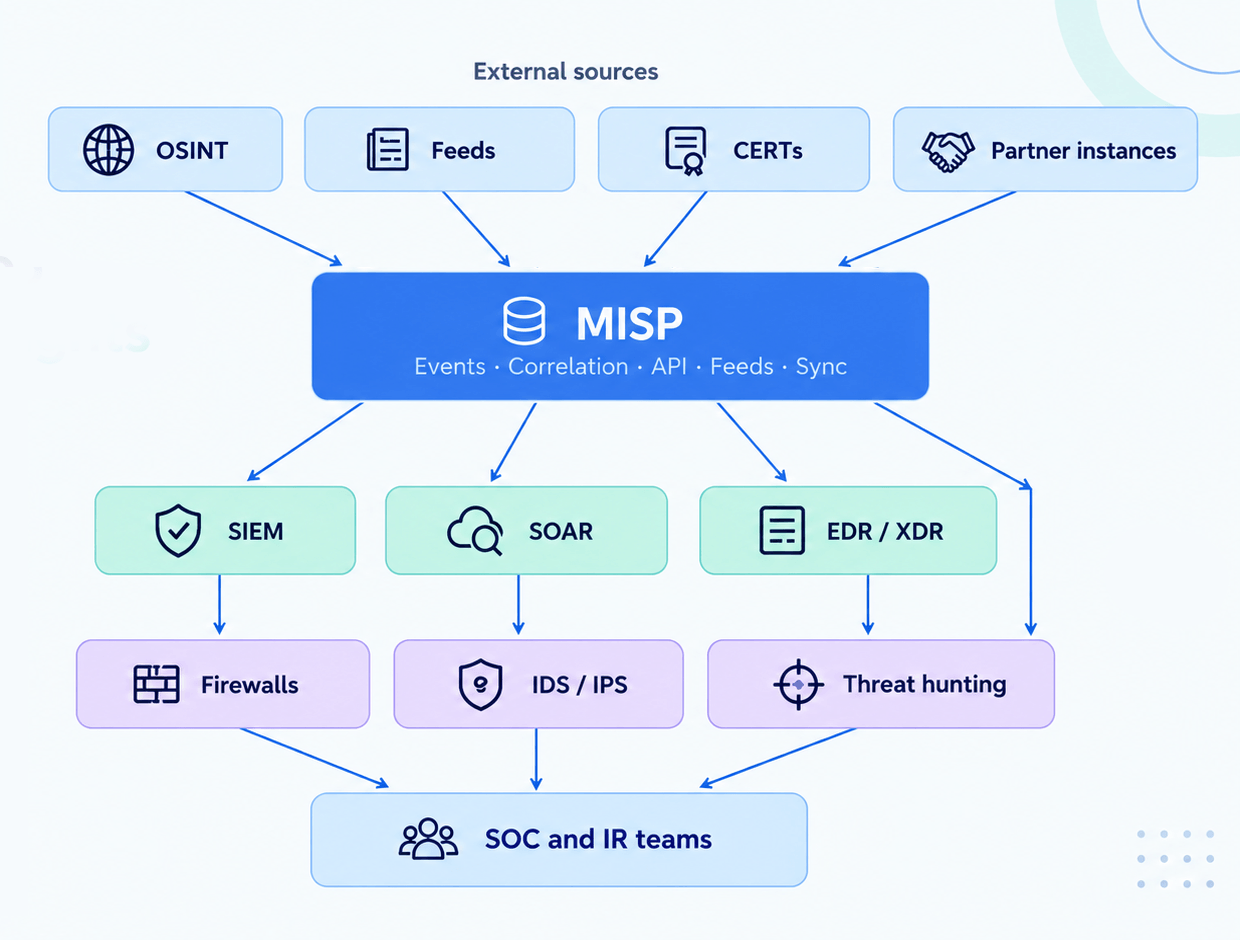
Threat Intelligence Sources
Internal teams, OSINT pipelines, commercial and open-source feeds, CERT and ISAC communities, partner MISP instances.
MISP Core
Events, Attributes, Objects, Feeds, Correlation engine, REST API, PyMISP, and Synchronization.
Integration and Automation Layer
API connectors, PyMISP scripts, scheduled exports, and custom automation including Loginsoft's Security and Threat Intelligence Integrations practice.
Security Operations Layer
SIEM, SOAR, EDR/XDR, firewalls, IDS/IPS, and threat hunting tools consuming MISP intelligence for detection and response.
How MISP Works: The End-to-End Workflow
MISP takes threat data from feeds, APIs, and analyst inputs, then structures and correlates it to identify relationships between indicators and events. It enriches the data with additional context, filters out potentially unreliable indicators, and shares the resulting intelligence with trusted organizations or security tools, closing the loop between intelligence ingestion and security response.
Step 1: Collect Threat Intelligence
Intelligence enters MISP from internal investigations, scheduled feeds, partner syncs, and OSINT pipelines simultaneously.
Step 2: Normalize and Structure Intelligence
Raw indicators are typed and tagged with TLP markings and confidence classifications so downstream tools consume them consistently.
Step 3: Enrich and Correlate Indicators
The correlation engine links new indicators to existing events. Expansion modules add external context. ATT&CK Galaxies connect indicators to adversary techniques.
Step 4: Share Intelligence with Trusted Communities
Validated intelligence is published to sharing groups or exported as a feed for partner organizations.
Step 5: Distribute IOCs to Security Controls
SIEM, SOAR, EDR, firewalls, and IDS/IPS receive updated IOCs via API, feed subscription, or scheduled export.
Step 6: Trigger Detection and Response
Security tools match events and traffic against distributed IOCs. Confirmed detections write back to MISP as sightings, closing the loop and improving shared intelligence for the community.
MISP Integration Includes
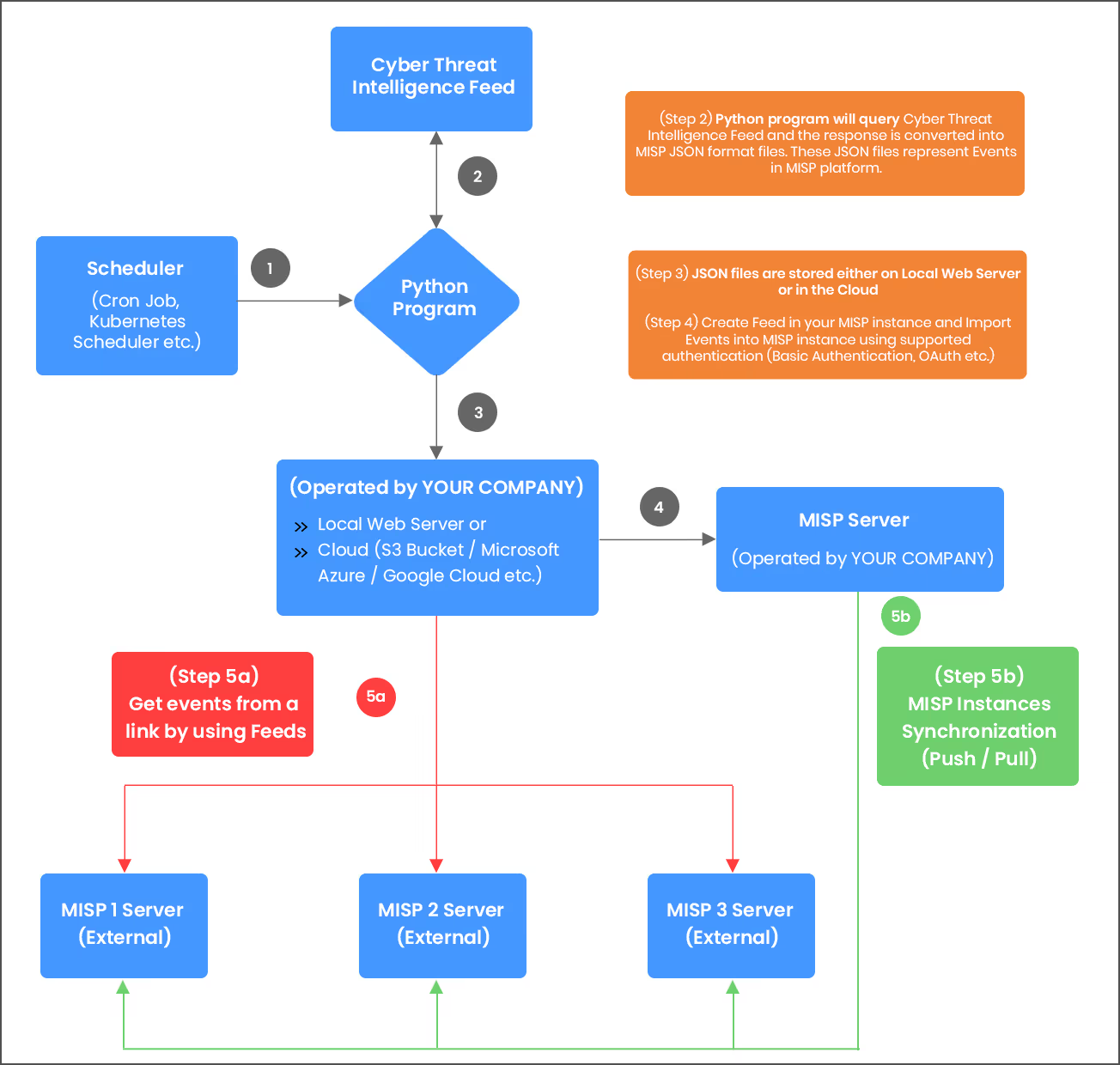
Loginsoft has integrated its partner's threat feed with MISP Open Source software for threat information sharing. This integration allows an organization's security analysts to search for event attributes (files, IPs, hashes, malware, URLs, and more) in MISP from threat intelligence sources. MISP users benefit from the collaborative knowledge about existing malware and threats, improving the counter-measures used against targeted attacks and enabling preventive actions and detection.
- Query Cyber Threat Intelligence source using a third-party API
- Feed response is converted into MISP Events (JSON format files) stored on a local web server or in the cloud
- MISP Events can be imported into MISP platform in two ways: using MISP Instances Synchronization, or using Feeds configured in the MISP platform
- A scheduler automates importing of events into MISP platform at a scheduled time
Python v3.8 is used for the integration. Loginsoft's Security and Threat Intelligence Integrations service connects partner threat feeds, IOC sources, and intelligence platforms into your existing security stack.
High Level Design for MISP Integration
The diagram below shows how threat intelligence flows from the source API through the integration layer into MISP and then out to the security operations team for detection and response.
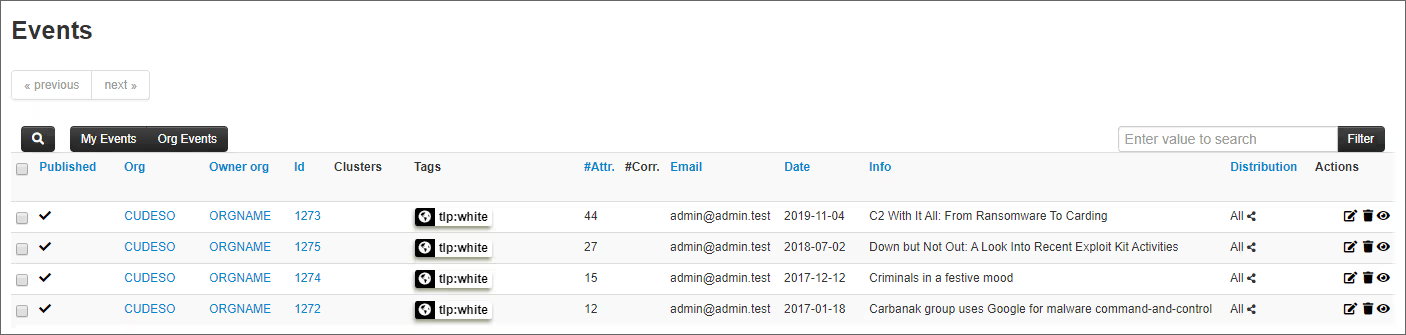
List of Events Imported Into MISP Platform
Once the integration runs, structured events are pulled from the threat intelligence source and imported into MISP with all associated attributes intact. The screenshot below shows a representative list of imported events as they appear in the MISP platform.
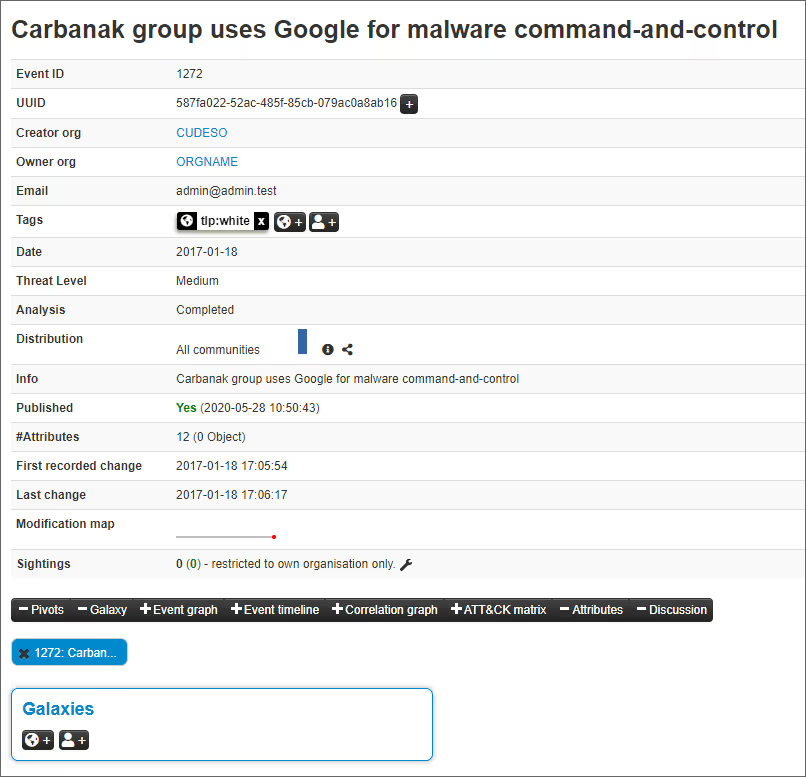
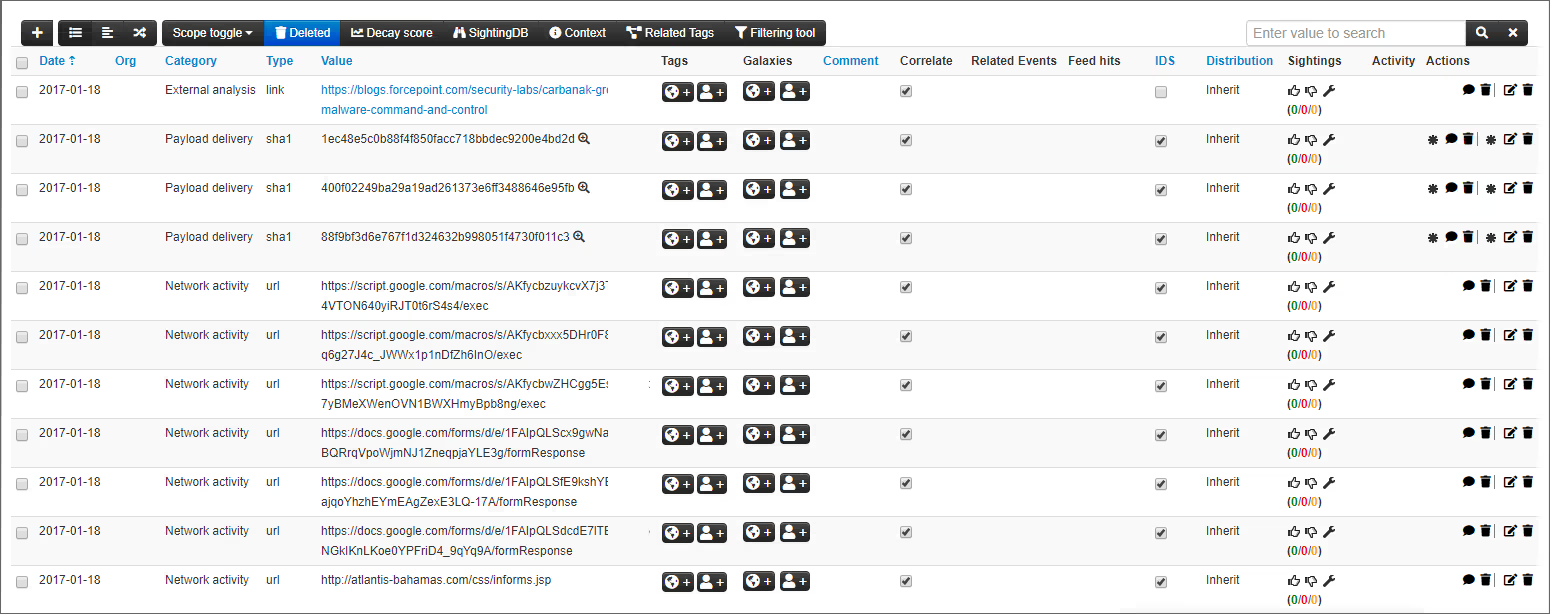
Sample Event with Attributes for MISP Integrations
Each imported event carries a full set of attributes that analysts can use for detection, correlation, and investigation. The screenshots below show a sample event including malware command references and the associated indicator list.
MISP Integration Capabilities
MISP supports the full threat intelligence lifecycle, from collection and enrichment to sharing and distribution.
- Threat Intelligence Collection: Ingests intelligence from internal investigations, OSINT feeds, commercial vendors, CERT communities, and partner MISP instances.
- Threat Intelligence Sharing: Shares events with trusted groups, sector communities, or the broader MISP network using TLP markings and distribution controls.
- IOC Management and Correlation: Stores IPs, domains, URLs, file hashes, malware indicators, email artifacts, CVEs, and threat actor identifiers, while automatically correlating related events.
- Threat Intelligence Enrichment: Uses MISP modules and external services to enrich indicators with reputation and contextual data. MISP Galaxies can link indicators to MITRE ATT&CK techniques, malware families, and threat actors.
MISP APIs and Integration Methods
MISP provides several integration methods for different automation and data-sharing requirements, including API-based access, scheduled feeds, and synchronization between MISP instances.
- MISP REST API: Provides API access to query, create, and export MISP events and attributes using API keys.
- PyMISP: Official Python library for the MISP REST API. It can automate intelligence queries, feed imports, event creation, and synchronization workflows.
- MISP Feeds: Pulls structured threat intelligence from external URLs on a scheduled basis. Organizations can also publish MISP-formatted feeds for trusted partners.
- MISP Synchronization: Enables two MISP instances to exchange threat intelligence automatically, supporting collaboration between organizations and threat intelligence communities.
MISP Threat Intelligence Data Formats and Standards
MISP normalizes threat intelligence from different sources into a consistent data model and supports multiple formats for exchanging intelligence with external security tools.
- STIX and TAXII Integration: Supports STIX v1 and v2 for exchanging structured threat intelligence. TAXII can be used to transport STIX-based intelligence between systems.
- IOC Export and Import Formats: Supports formats such as CSV, JSON, OpenIOC, YARA, Suricata, and Zeek for exchanging and operationalizing threat indicators.
MISP Integration with Security Tools
MISP connects threat intelligence with different layers of the security stack, helping security teams collect, enrich, correlate, and distribute indicators across existing security workflows. Loginsoft can support MISP integrations that connect threat intelligence with SIEM, SOAR, endpoint, network, and vulnerability intelligence workflows.
MISP Integration Use Cases
MISP integration connects threat intelligence with security operations, helping teams enrich investigations, support threat hunting, analyze malware, respond to incidents, and share intelligence across organizations. Common use cases include:
- Automated IOC Enrichment: Automatically add campaign context, related indicators, and first-seen dates to alerts to support faster investigations.
- Threat Hunting: Query MISP for indicators associated with specific threat actors or ATT&CK techniques and use them to guide proactive searches across SIEM logs and EDR telemetry.
- Malware Analysis: Create MISP events from malware findings such as hashes, C2 domains, and registry keys, then correlate them with known malware families and campaigns.
- Incident Response: Collect and correlate IOCs, identify related infrastructure, share intelligence with trusted peers, and distribute indicators to security controls during active incidents.
- SOC Detection and Monitoring: Use high-confidence indicators to trigger automated SIEM alerts and lower-confidence indicators for analyst review and watchlists.
- Threat Intelligence Sharing Between Organizations: Share structured, machine-readable threat intelligence with ISACs, government programs, and trusted partners instead of relying on fragmented email-based sharing.
How to Integrate MISP With Your Security Stack
MISP connects with security tools through REST APIs, feeds, synchronization, and platform-specific integrations. The integration establishes data flows between threat intelligence sources, MISP, and tools such as SIEM, SOAR, EDR, firewalls, and IDS/IPS
- Define the Integration Objective: Determine whether the goal is IOC enrichment, automated detection, feed ingestion, SOAR playbook enrichment, or intelligence sharing. Use this objective to guide the integration design.
- Identify Data Sources and Destinations: Map the sources that will feed threat intelligence into MISP and identify the security tools that will consume the data.
- Configure MISP API or Feed Integration: Generate API keys with minimum required permissions. Configure feed URLs, authentication, synchronization schedules, and mappings for incoming data formats.
- Map and Normalize Threat Intelligence: Apply TLP markings and confidence scores during ingestion. Standardize indicator types to support consistent correlation and downstream consumption.
- Test the Integration: Validate IOC ingestion accuracy, attribute types, deduplication, synchronization timing, and downstream alert generation before going live.
- Monitor and Maintain the Integration: Monitor API failures, expired credentials, stale indicators, and feed format changes. Regularly review the integration to maintain reliable data flow.
MISP Integration Security Considerations
Connecting MISP to your security stack introduces access, data integrity, and sharing risks that should be addressed during integration design.
- API Authentication and Access Control: Use separate API keys for each integration, with minimum required permissions and regular rotation.
- Least-Privilege Access: Use read-only keys for read-only integrations and limit write access to required functions.
- Protecting Sensitive Threat Intelligence: Verify sharing group settings and prevent restricted intelligence from reaching unintended recipients.
- Validating Third-Party Threat Feeds: Check feed accuracy, freshness, and false-positive rates before enabling automated actions.
- Preventing Malicious or False Indicators: Use MISP warning lists and confidence thresholds before indicators trigger automated blocking.
- Data Sharing and Distribution Controls: Enforce TLP markings across published events and downstream integration pipelines.
- Monitoring API and Integration Activity: Log API calls and synchronization events, and alert on unusual volumes or unexpected source IPs.
Common Challenges with MISP Integration
MISP is not a plug-and-play solution. Most integration challenges involve data quality, compatibility, feed reliability, or ongoing maintenance.
- Data Quality and Duplicate Indicators: Multiple feeds may provide overlapping indicators, requiring active curation alongside deduplication.
- Indicator Normalization: Inconsistent indicator types can disrupt correlation and downstream tool consumption.
- Feed Reliability and Freshness: Feeds can become stale or unavailable, causing pipelines without fallback logic to degrade silently.
- Integration Compatibility: Check each destination tool’s data format and API requirements before building the integration.
- API Rate Limits and Performance: High query volumes can stress MISP, so use batch queries and caching where appropriate.
- Managing Large Volumes of Threat Intelligence: Unmanaged indicator volumes can reduce correlation performance and increase operational overhead.
- False Positives and Indicator Validation: Route high-confidence indicators to automated blocking while using lower-confidence indicators for monitoring or watchlists.
- Maintaining Custom Integrations: Custom PyMISP scripts require ongoing maintenance as MISP versions and API behavior evolve.
MISP Integration Best Practices
These practices apply regardless of your stack size or the number of integrations you are running. They reflect the most common points of failure seen in MISP deployments.
- Start with high-accuracy feeds before onboarding every available source
- Define IOC quality and confidence thresholds before enabling automated actions
- Apply tags, taxonomies, and TLP markings consistently across all events
- Automate repetitive workflows: feed ingestion, export, enrichment
- Validate intelligence before triggering automated blocking
- Verify sharing restrictions before publishing events
- Monitor feed and integration health as a standing operations task
- Retire stale indicators on a defined schedule
Conclusion:
MISP is more than an IOC repository. Its REST API, PyMISP library, feed infrastructure, STIX/TAXII support, and synchronization capabilities connect threat intelligence directly to detection, investigation, and response workflows. Properly integrated, MISP becomes an active component of your security operations lifecycle, not a passive database. Loginsoft builds and maintains MISP integrations within enterprise security stacks, from custom connector development to full SIEM, SOAR, and EDR integration.
FAQ's
Q1.`What is MISP integration?
MISP integration is the process that connects the MISP threat intelligence platform with security tools such as SIEM, SOAR, EDR, firewalls, and IDS/IPS. It automates the exchange and the actionability of threat intelligence.
Q2. What is MISP used for?
MISP helps security teams collect, organize, correlate, and share threat intelligence. It can store indicators such as IP addresses, domains, file hashes, malware data, threat actor information, vulnerabilities, and fraud-related indicators.
Q3. How does MISP integrate with SIEM platforms?
MISP can export threat indicators to SIEM platforms, where they can be used for correlation and detection. When incoming logs match known indicators, the SIEM can generate alerts or trigger automated response workflows.
Q4. Does MISP have an API?
Yes. MISP provides a REST API that uses API keys for authentication. The API supports automated indicator management, event synchronization, searches, exports, and integration with external security tools.
Q5. What is PyMISP?
PyMISP is a Python library for interacting with the MISP REST API. It helps developers automate tasks such as creating events, adding indicators, searching threat intelligence, and integrating MISP into custom security workflows.
Q6. Can MISP integrate with SOAR platforms?
Yes. MISP can integrate with SOAR platforms to automate threat intelligence ingestion, enrichment, investigation, and response actions.
Table of Contents
Early October Brought Chained Exploits and Fresh Malware to the Front Lines
Early October Brought Chained Exploits and Fresh Malware to the Front Lines
Explore the key security, speed, and performance differences between TLS 1.3 and TLS 1.2
Ready to Find and Fix Your Security Weak Points?
LoginSoft's cybersecurity experts help organizations conduct thorough gap analyses, build prioritized remediation roadmaps, and achieve measurable security maturity improvements.
Schedule a Security Assessment
Hari Charan
Director of Security Research & Threat Intelligence
A MESSAGE FROM OUR TECHNOLOGY LEADER
The NVD enrichment cutback is not a surprise to us - it’s the inflection point we’ve been preparing for. At Loginsoft, we’ve spent years building the research depth and tooling infrastructure to independently enrich vulnerabilities at scale, with the accuracy and context modern security programs require. LOVI is our answer. Our mission is simple: ensure that no CVE relevant to your environment goes unanalyzed, unscored, or unactioned - regardless of what remains in NIST’s queue.
Key Takeaways
- Standard audit tools do not detect intentionally malicious packages. Tools like npm audit and pip-audit focus on known vulnerabilities, not malware behavior. A newly published malicious package with no CVE or advisory can pass these checks undetected.
- The attack surface is trust, not just code. Typosquatting, dependency confusion, and malicious updates exploit package-manager resolution and implicit trust. Developers and CI pipelines may install packages without verifying their provenance or behavior.
- Registry controls are only one layer of defense. Registry scanning, malware detection, and maintainer 2FA reduce risk, but attackers exploit gaps between these controls. Effective protection combines behavioral analysis, dependency pinning, SBOM governance, and build-environment isolation.
Stay Ahead
Get the Latest Cybersecurity Insights
Security research, threat intelligence, vulnerability updates, product news, and expert insights, delivered directly to your inbox. Stay informed. Stay secure.

BLOGS AND RESOURCES
Latest Articles

By using this website, you agree to the storing of cookies on your device to enhance site navigation, analyze site usage, and assist in our marketing efforts. View our Privacy Policy for more information.
Accept





© Copyright 2026, All Rights Reserved by Loginsoft
Privacy policy